Where the ornaments come from
Every kit carries one piece of ornament that did not come out of a font. Here is how a 1796 engraving of a knawel plant became the Herbarium mark — and why we do it this way.
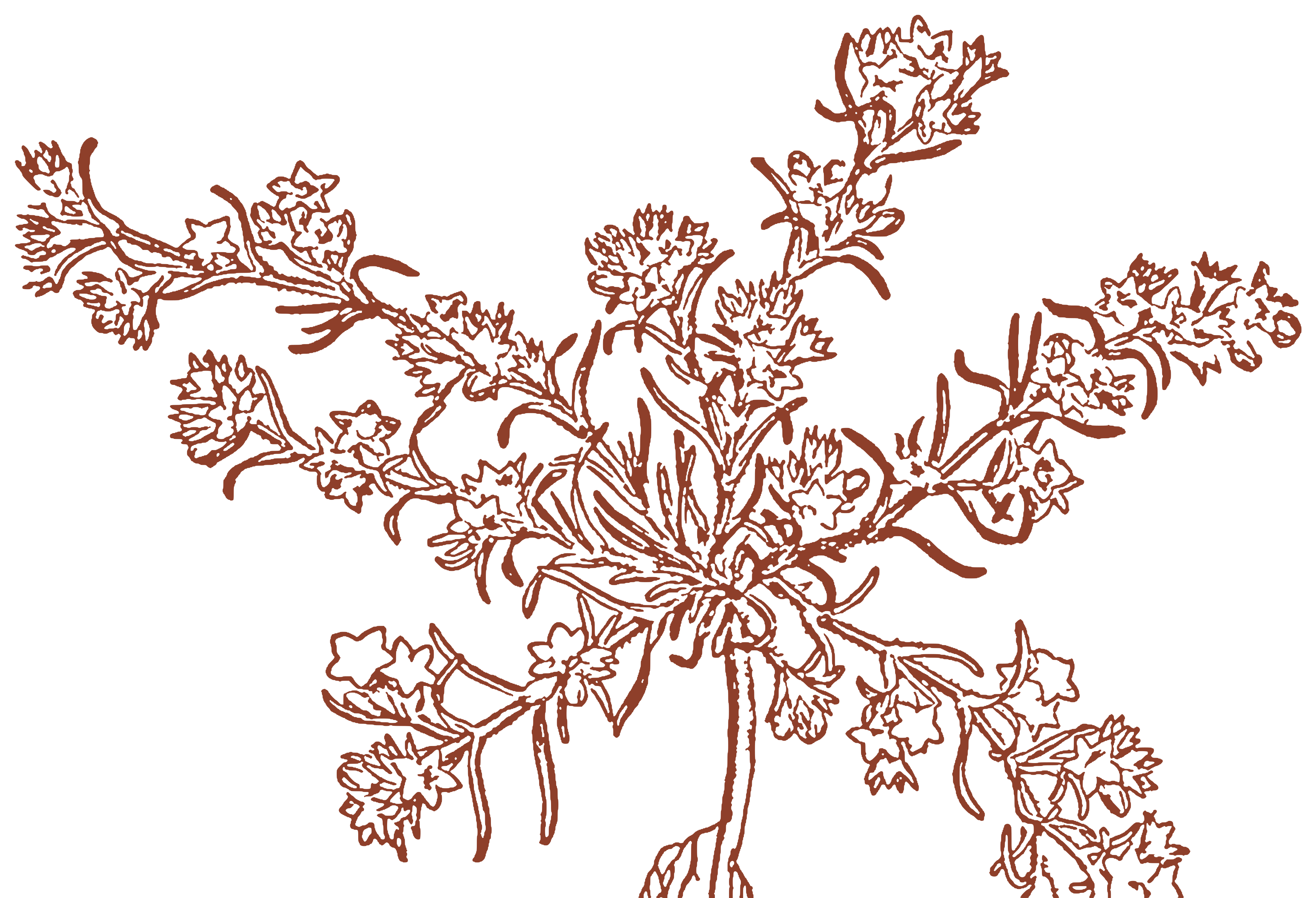
The Herbarium kit’s ornament is a coloured engraving after James Sowerby, published in 1796 and held by the Wellcome Collection under a Public Domain Mark. We found it the slow way: searching the collection’s catalogue by subject, pulling candidates at full resolution, and laying them side by side on a contact sheet before choosing. The first candidate for another kit turned out, on inspection, to be an industrial water-distilling plant in Aden. It looked right at thumbnail size and wrong at any other. So now nothing is chosen from a thumbnail.
Once chosen, the plate is cleaned: the paper tone is flattened, the halftone and foxing removed, and the linework traced into vector paths at a consistent weight, so it prints as crisply at 20 millimetres on a label as it does at a metre on a poster. The result is not the scan; it is a drawing derived from it, and it is yours to use under the same public-domain terms the source carries. Your kit names the source, and so does the kit’s page.
Why not draw something new, or generate it? Two reasons. A generated botanical looks like every other generated botanical, and buyers can tell. And an engraving from 1796 has a quality no one can fake on demand: someone spent days on it with a burin. Borrowing that — honestly, with attribution — is how a $249 kit gets to look like it cost more.
Not every kit uses an archive plate. Distill’s retort comes from a chemistry engraving of 1802; Classic’s urn from a pattern book. Batch, Refill, Patina and Prism carry marks we make ourselves — a torn label, a refill arrow, oxidation mottling, a cut-paper prism — because a plate would fight the idea. The rule is only that something in each kit came from a hand, and that we say which.